
Why Are Human Hair Wigs So Expensive? The Ultimate Industry Insider Guide
Introduction
Why does a premium human hair wig cost as much as a designer handbag? To outsiders, it’s just hair. To insiders, it’s a mix of skyrocketing raw material costs and brutal manual labor. Let’s bypass the marketing fluff and look at the real factory-floor metrics driving these prices.
(1)The Price Tag Shock: Reality vs. Expectation
Many buyers experience sticker shock when comparing a $50 synthetic piece to a $500+ virgin human hair wig. The common expectation is that “hair is just hair.” The reality? Synthetic fibers are extruded by machines by the ton. Human hair is a scarce biological resource.
It takes years for a donor to grow healthy, 24-inch hair. We aren’t just selling a manufactured good; we are sourcing a limited, naturally grown material. To keep the cuticles intact and facing the same direction (Remy hair), every bundle must be carefully cut directly from the donor, making cheap mass production impossible.
(2)Quick Summary: The Core Factors Driving the Cost
Let’s cut to the chase. The high price tag of human hair wigs boils down to three non-negotiable factory realities:
- Raw Material Scarcity: Healthy, unprocessed donor hair (especially lengths over 20 inches) is increasingly rare and expensive to source.
- Intense Manual Labor: A premium full lace wig requires a skilled technician to manually ventilate (tie) individual strands to the lace cap. This painstaking process takes 40 to 60 hours per unit.
- Processing Wastage: Sorting, hacking, and drawing hair leads to a 20%-30% raw material loss. Ultimately, you are also paying for the hair that ends up on the factory floor.
1.Raw Material Scarcity: The Truth About 100% Human Hair Supply
The global supply chain of premium human hair is fundamentally bottlenecked by human biology. Unlike synthetic plastic fibers that can be extruded by factory machines in endless tons, 100% real human hair takes years of natural time to yield. To harvest a single pristine, 24-inch raw ponytail, a donor must grow their hair meticulously for three to five years without ever applying harsh chemical dyes or perms.
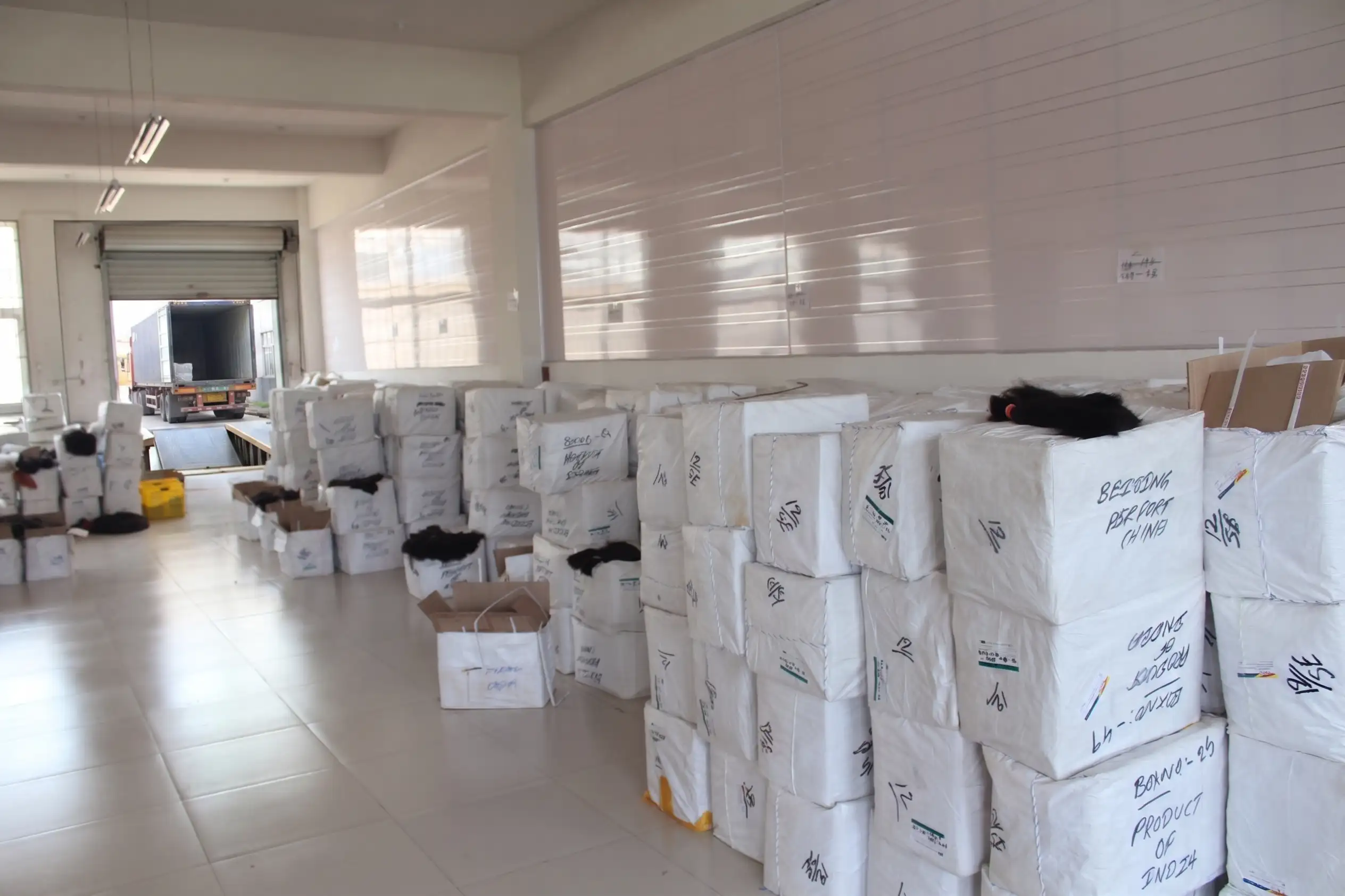
As a direct source factory with 20 years of roots in this industry, we face the reality of this market every single day: we are competing aggressively at the origin for a shrinking pool of biological assets. This sheer, unyielding scarcity dictates an absolute price floor before the hair even reaches our manufacturing floor. For our B2B wholesale and OEM/ODM partners, understanding this biological limit is crucial. When buyers demand impossibly low prices for long, premium lengths, they aren’t negotiating against our factory margins—they are attempting to negotiate against nature itself.
(1) Why High-Quality Donor Hair is Increasingly Rare
Modern lifestyle shifts have created a permanent shortage of pristine donor hair. In the past, rural women provided a steady supply of untreated, natural hair. Today, global beauty trends mean almost everyone uses chemical chemical dyes, perms, or heat styling. This ruins the hair cuticles, making it unusable for premium virgin or Remy products.
Furthermore, younger generations now prefer modern, shorter haircuts. Finding long, healthy hair—especially in uniform textures like “Wet and Wavy” or sleek straight—has become an elite sourcing challenge. Factories must filter through tons of gathered hair just to find a few premium bundles, causing the market price for raw, uncompromised material to shoot up annually.
(2)The Ethical Sourcing Premium
“Ethical sourcing” isn’t a marketing gimmick—it is a tangible factory expense. A traceable supply chain means paying fair, competitive prices directly to the original donors.
Cheap alternatives exist. Unscrupulous suppliers use “fallen hair” (dead strands swept from salon floors or hairbrushes). It’s practically free, but the cuticles run in opposite directions. To prevent immediate matting, this hair is aggressively acid-washed, destroying its lifespan.
For high-end B2B and OEM manufacturing, we strictly reject fallen hair. We invest heavily in direct, local collection networks to ensure women sell their hair willingly at premium prices. This transparent supply chain adds a massive premium to the raw material cost, but it is the only way to guarantee the pure, tangle-free Remy quality that protects
(3) Grade and Alignment: Virgin Hair vs. Remy Hair vs. Non-Remy Hair
At the factory level, cuticle alignment dictates the price.
Virgin Hair is the apex: cut from a single donor, chemically untouched, with 100% intact cuticles running in the exact same direction. It is the rarest and most expensive material.
Remy Hair also features aligned cuticles (root to root, tip to tip) to prevent tangling, but it may be gathered from multiple donors and undergo gentle steam processing for textures. It is the premium standard for high-end B2B orders.
Non-Remy Hair is cheap fallen hair. Because the roots and tips are mixed, the cuticles clash. Factories must strip the cuticles with an acid bath and coat the strands in heavy silicone to make them temporarily smooth. After a few washes, the silicone strips away, leaving a matted nightmare. In this industry, you get exactly what you pay for.
(4) Texture & Length Exponentials: Why 20+ Inches and Specific Textures Cost a Fortune
Pricing in the hair industry scales exponentially, not linearly. A 24-inch bundle isn’t just twice the price of a 12-inch bundle; it can be three to four times as much. Why? Hair grows only about six inches a year. Securing healthy 24-inch hair means buying nearly half a decade of pristine growth.
Furthermore, to achieve thick, full ends (Double Drawn hair), factories must manually hack and draw out the shorter hairs. You might start with a kilo of raw material and yield only 300 grams of solid 24-inch strands. You are literally paying for the discarded weight.
Texture and color also multiply the cost. Achieving a flawless 613 Platinum Blonde or a resilient “Wet and Wavy” pattern requires the strongest Virgin hair that can survive aggressive bleaching or high-temperature steam curling. Weak hair melts or breaks on the factory floor. Premium lengths and textures demand the absolute top 5% of global raw material.
2.Labor-Intensive Craftsmanship: The Artisan Cost
Beyond raw materials, the most significant hidden cost of a premium wig is human labor. You aren’t just buying hair; you are paying for weeks of painstaking craftsmanship.
While cheap synthetic wigs are mass-produced by machine wefting in minutes, a luxury full lace or hand-tied wig requires a specialized technique called ventilating. An artisan uses a tiny needle to hand-knot 1-3 strands of hair into a delicate Swiss lace cap at a time. To complete a single 150% density hand-tied wig, a skilled technician must tie over 100,000 individual knots. This grueling process takes 80 to 100 hours per unit.
This manual labor guarantees the hair swivels naturally, allowing clients to part it anywhere. It is the ultimate differentiator between a stiff, fake-looking hairpiece and a seamless, natural scalp illusion. In an era of automation, this artisan cost cannot be bypassed.
(1)Machine-Weft vs. Hand-Tied Wigs
At the factory level, construction methods split the market into two harsh pricing tiers.
Machine-wefted wigs are built for speed. Heavy-duty sewing machines stitch hair onto tracks in minutes. While cost-effective and durable, these thick tracks create unnatural bulk at the roots, limiting breathability and preventing multi-directional parting.
Hand-tied wigs (like Full Lace or HD Lace) abandon machines entirely. Artisans knot every single strand onto a delicate lace base. Zero tracks, zero bulk. The result is an ultra-lightweight cap that mimics a real scalp, allowing the wearer to part the hair anywhere. You aren’t just paying for comfort; you are funding weeks of meticulous human labor to achieve that seamless, undetectable illusion.
(2) The Lace Matrix: Swiss Lace, HD Lace, and French Lace
The foundation of a premium hand-tied wig is the lace matrix. The thinner the lace, the higher the material cost and the greater the risk of tearing during ventilation, which demands top-tier artisans and drives up the price.
French Lace is the durable workhorse. It is thicker and tear-resistant, making it perfect for beginners and lowering manufacturing risks, though the grid is slightly more visible.
Swiss Lace is the standard for high-end units. It is softer, finer, and blends beautifully with the scalp while maintaining reasonable durability.
HD Lace (High Definition) is the pinnacle of luxury. It is an ultra-thin, invisible material that flawlessly “melts” into any skin tone. However, its extreme fragility means factory reject rates are high, and ventilating it requires masterful precision. You are paying a premium for a truly undetectable hairline and the sheer difficulty of manufacturing it without destroying the delicate matrix.
(3)Density Dynamics: From 130% to 200% Density Cost Scaling
In the factory, wig density isn’t just an aesthetic choice; it’s a strict mathematical equation of weight and labor.
130% to 150% Density is the industry baseline. It mimics natural human hair volume, requiring a standard weight of raw material and baseline ventilation hours.
180% to 200%+ Density is where costs skyrocket. Pushing a wig to 200% density requires injecting an additional 50 to 100+ grams of premium donor hair. When dealing with rare 24-inch Virgin hair, those extra grams alone cost a fortune.
But the raw hair is only half the bill. For hand-tied caps, 200% density means artisans must meticulously tie tens of thousands of extra knots into the same limited lace area. This extends production by days. Furthermore, overcrowding the grid severely increases the risk of tearing the fragile HD or Swiss lace, driving up the factory defect rate. You are financing both a massive raw material upgrade and grueling artisan overtime.
3. Chemical Processing and Sorting: The Invisible Manufacturing Costs
Before a single knot is tied, raw hair undergoes grueling factory prep. First is sorting. Workers manually pull bundles through steel hackles to remove short strands, grays, and impurities. This drawing process causes a massive 20% to 30% raw material loss. Ultimately, you are paying for the unusable hair swept off the factory floor.
Then comes processing. Premium Remy hair bypasses cheap, harsh acid baths. However, achieving extreme colors like #613 blonde requires slow, low-temperature bleaching over 10 to 15 days to preserve the cuticles. Fast, aggressive chemicals will literally melt the hair. Even creating textures like Deep Wave relies on precision high-temperature steam-baking in specialized ovens, not cheap chemical perms. These invisible, highly technical steps—and the time they consume—are what dictate the wig’s actual lifespan.
(1) The Delicate Decoloring & Dyeing Process (Preventing Acid Damage)
Lifting dark, raw donor hair to a pristine blonde is the most volatile factory process. Cheap manufacturers use highly concentrated bleach and harsh acid baths to aggressively strip pigment in a matter of hours. This obliterates the cuticles. To mask the damage, the hair is coated in heavy industrial silicone, but once washed, it turns into an untangleable bird’s nest.
In contrast, high-end factories utilize a slow, low-temperature dyeing technology. The bundles sit in gentle, low-ammonia chemical baths for up to 15 to 20 days. This delicate process extracts the natural melanin molecule by molecule, maintaining the hair’s structural integrity and keeping the cuticles perfectly intact. This protocol takes up massive factory space, stalls cash flow, and requires expensive chemical formulas. When you buy premium colored hair, you are paying for the time, science, and patience required to prevent chemical burns.
(2) Post-Processing Wastage: Why 1kg of Raw Hair Only Yields 600g of Premium Wig Hair
The “hidden” weight loss in hair manufacturing is a massive profit killer for the factory, and by extension, a major cost for the buyer. When we receive 1kg of raw, tangled ponytails, we aren’t just cleaning them. We are stripping the unusable.
The cleaning and hacking process removes short, broken strands, thick roots, and weak tips that don’t meet our quality standard. If we aim for a “Double Drawn” effect—where hair remains thick from root to tip—we must discard nearly 40% of the raw weight. After processing, bleaching, and steam-curling, the final net weight of premium, useable hair is often only 600g. You are effectively paying for the entire 1kg of the original harvest, including the 400g of waste that we meticulously filtered out to guarantee your brand’s quality.
4. Human Hair vs. Synthetic Wigs: Value ROI Analysis
When comparing upfront costs, a $50 synthetic wig seems like a steal compared to a $500 human hair unit. But look at the Return on Investment (ROI). Synthetic fibers are essentially plastic. They melt under heat tools, mat permanently at the nape from daily friction, and typically end up in the trash within 1 to 3 months.
In contrast, high-quality human hair is a long-term investment. A premium Remy wig can last 1 to 3 years with proper care. It can be washed, heat-styled, dyed, and revitalized just like natural growing hair. For B2B wholesalers, the business math is brutal but simple: Synthetics offer high volume but razor-thin margins and endless customer complaints. Premium human hair requires serious upfront capital, but it secures high retail margins, repeat high-net-worth clients, and a bulletproof brand reputation. You aren’t just buying hair; you are paying for cost-per-wear longevity.
(1) The Lifespan Equation (3 Months vs. 1-3 Years)
Let’s break down the “cost per wear.” A synthetic wig looks flawless on day one, but plastic fibers degrade rapidly. Daily friction against the shoulders causes irreversible micro-tears in the synthetic strands, leading to permanent, uncombable matting within 4 to 12 weeks. Once ruined, it belongs in the trash.
High-end Virgin or Remy human hair, however, features intact cuticles. This natural biological armor protects the inner cortex. With deep conditioning, a premium unit retains its bounce and luster for 12 to 36 months. For salon owners and B2B buyers, this lifespan equation is the ultimate selling point. A $600 wig worn daily for two years costs less than $1 a day—mathematically cheaper than constantly replacing $50 synthetic units. You are pricing longevity, not just the physical product.
(2) Styling Versatility: Heat Resistance, Dyeing, and Perming
Synthetics are “what you see is what you get.” You cannot re-dye a plastic fiber, and high heat will permanently melt its structure. If a client wants to switch from a straight look to a curly style, they must buy a brand-new unit.
Premium human hair, however, is a biological blank canvas. Because the protein structure and cuticles remain intact, it handles extreme heat tools, professional bleaching, and chemical perming just like natural growing hair. A salon professional can take a raw 24-inch straight Virgin bundle, bleach it to platinum, and steam-process it into a bouncy “Wet and Wavy” texture for a bespoke client order. This unparalleled versatility allows high-end B2B buyers and salons to offer lucrative custom coloring and styling services, creating massive retail profit margins that synthetic products simply cannot support.
(3) The Texture Experience: Realism, Movement, and Tangling Risk
Synthetic wigs lack natural density distribution, resulting in a stiff, “helmet-like” movement and an unnatural, plastic shine under sunlight. More importantly, synthetic fibers lock together under friction. A few days of rubbing against a collar, and the nape turns into an uncombable bird’s nest.
Premium human hair flows precisely because it retains its natural weight and biological cuticles. A well-constructed human hair wig moves like water. For popular textures like “Wet and Wavy,” human hair bounces back naturally when moistened, whereas synthetics often lose their shape permanently. Furthermore, because we strictly use Remy hair with cuticles aligned in the same direction, the strands glide past each other, dropping the tangling risk to near zero. For our bulk B2B wholesale clients, this realistic movement and zero-tangling guarantee mean no post-sale client complaints, directly protecting your brand’s reputation.
5. Beyond the Purchase: The Next Hidden Costs You Need to Know
Buying the wig is just the first step. For bulk B2B wholesale buyers, the true landed cost involves critical post-production logistics and maintenance.
First, shipping and customs. Unlike lightweight synthetics, human hair carries serious weight and value. Shipping 50 kilos of premium hair internationally demands high-tier, insured air freight and often incurs specific import duties due to its high declared biological value.
Second, professional maintenance. A 100% human hair unit requires salon-grade, sulfate-free conditioning to protect its cuticles and 1-3 year lifespan. Educating your clients on this upkeep is an operational cost for your brand. With 20 years of manufacturing experience, we always advise our OEM/ODM partners: calculate your total landed and operational costs, not just the raw factory unit price.
(1) Specialized Haircare Products Maintenance Kit
Unlike growing hair, a wig is completely severed from the scalp’s natural sebum (oil) supply. It cannot hydrate itself. Generic drugstore shampoos containing harsh sulfates will completely strip the hair, leaving it brittle and prone to breakage.
To protect a premium human hair investment, buyers must use specialized, sulfate-free deep conditioners and lightweight hydrating oils. For demanding textures like the industry-standard “Wet and Wavy,” regular moisture application is non-negotiable to maintain that crisp, bouncy curl pattern and prevent dry frizz.
As a strict B2B bulk supplier, we always warn our wholesale clients: educating your retail buyers on this mandatory haircare routine is critical. Selling the unit is only half the transaction. Advising them to invest in a proper maintenance kit prevents ruined cuticles and eliminates unjust return claims caused by end-user error, directly safeguarding your profit margins.
(2) The Cost of Improper Care: Why Expensive Wigs “Die” Early
An expensive human hair wig doesn’t just “die”—it is usually murdered. Over our 20 years of manufacturing experience, we’ve seen countless premium units ruined by end-user negligence within months.
The biggest killer is thermal and chemical abuse. Because a wig lacks natural scalp oils, exposing it to daily 400°F flat irons or cheap drugstore shampoos violently strips its moisture. The cuticles crack, causing irreversible dryness. For delicate, highly processed textures like the industry-standard “Wet and Wavy,” sleeping on wet hair without a protective silk bonnet guarantees permanent, uncombable matting.
For our bulk B2B wholesale and OEM/ODM clients, this is a critical operational risk. You deliver a flawless factory product, but end-user destruction leads to unjust return claims. Protecting your wholesale profit margins means enforcing strict, written care guidelines for your retail buyers. A premium wig is a fragile biological investment, not an indestructible plastic helmet.
6. Buyer’s Guide: How to Ensure You Are Actually Getting 100% Human Hair
The wig market is notorious for blending synthetic or animal fibers into so-called “100% Human Hair” to cut costs. For bulk wholesale buyers, a mixed batch can destroy a brand’s reputation overnight. Here is how to verify the authenticity directly on the factory floor.
The most foolproof method is the Burn Test. Snip a few strands and light them. Real human hair burns instantly, smells like burning feathers, and turns into fine ash that crumbles between your fingers. Synthetic fibers melt slowly, smell like burning plastic, and fuse into a hard, sticky black bead.
Secondly, the Bleach Test. Pure virgin hair will lift seamlessly to a #613 platinum blonde. If the bundle contains heat-resistant synthetic fillers, those plastic strands will refuse to lift, leaving dark, stubborn plastic streaks scattered throughout your freshly bleached bundle.
With 20 years of rigorous factory quality control, we invite all our B2B OEM/ODM partners to test our raw bundles. We strictly guarantee zero synthetic fillers, ensuring your bulk orders meet the highest biological purity standards.
(1)The Burn Test: How to Spot Synthetic Blends Instantly
In the factory, the burn test is our undisputed lie detector. Unscrupulous brokers often try to sneak heat-resistant synthetic strands into bulk raw bundles. To spot a blend instantly, isolate a few strands and apply a lighter.
100% human hair catches fire instantly. It smells exactly like burning feathers, and the residue turns into a fine, powdery ash that crumbles completely between your fingers.
Synthetic fibers react like plastic. They melt and curl away from the flame, emitting a toxic chemical odor. The residue solidifies into a hard, sticky black bead that cannot be crushed.
Over two decades of rigorous B2B manufacturing, we mandate this spot-check on every raw material delivery. It is the most brutal, effective way to ensure bulk wholesale shipments are pure, protecting your capital from cheap plastic fillers.
(2) Identifying “Floor Hair” and Chemically Stripped Counterfeits
In the raw material market, “floor hair” (fallen strands swept from salon floors) is the cheapest trap. Because the roots and tips are mixed, the cuticles clash, guaranteeing severe tangling. To sell this, counterfeiters use a heavy acid bath to chemically strip the cuticles, then disguise the dead strands by coating them in thick industrial silicone.
How do you identify it? When new, chemically stripped hair feels unnaturally slippery, heavy, and glassy. The real test happens after three washes with a harsh clarifying shampoo. Once the silicone washes down the drain, the hair reveals its true state: a dry, matted, uncombable bird’s nest. True Remy hair, with its intact cuticles, feels naturally soft and remains manageable wash after wash. As a B2B buyer, always run sample bundles through a vigorous wash test before placing bulk orders.
(3) B2B Sourcing vs. Retail Pricing: Red Flags of “Too Cheap” Wigs
In B2B sourcing, the factory floor dictates a rigid price floor. A raw 24-inch human ponytail costs a fixed, non-negotiable amount simply to harvest. If a supplier offers a 24-inch, 150% density lace wig for $60, massive red flags should fly.
The math is impossible. At that price, you are buying chemically stripped, fallen hair mixed with animal fibers or heat-resistant synthetics. Alternatively, the density is deceptively padded: packed with 6-inch filler hairs at the root, leaving the ends extremely thin and stringy.
This “bargain” is retail suicide. End-users will demand refunds the moment the first wash removes the industrial silicone coating, revealing a matted mess. For wholesale buyers, chasing the absolute lowest penny guarantees high return rates and a ruined brand. Legitimate OEM/ODM pricing reflects transparent, inescapable material and labor costs, not manufacturing miracles.
Conclusion: The True Value of Premium Hair
A luxury human hair wig is not a factory-stamped commodity; it is a rare biological asset. Behind the high price tag are years of natural hair growth, brutal sorting processes, and grueling artisan hours hand-tying tens of thousands of knots. For B2B wholesalers and salon owners, this upfront cost is the ultimate insurance policy. You are paying for longevity, styling versatility, and zero post-sale complaints.
(1)Factory FAQ
Can I find a cheap 100% human hair wig?
Yes, but it will be acid-washed “fallen hair” that completely mats after a few washes. In the hair industry, cheap bulk deals are always the most expensive mistakes in the long run.
Why does B2B custom manufacturing take so long?
Because ventilating a premium hand-tied lace unit takes a skilled technician over 80 to 100 hours of pure manual labor. You cannot rush or automate true craftsmanship.
(2)Summary: Is a Human Hair Wig Worth the Investment?
For end-users, the value lies in unparalleled realism and a multi-year lifespan. But for bulk wholesale and OEM partners, the answer is brutally simple: yes, it is the only way to survive in the high-end market.
In our 20 years on the factory floor, we’ve seen countless buyers try to cut corners. They chase cheap synthetic blends or rely on unreliable single-piece dropshipping gimmicks. It always ends the same way: an influx of customer complaints and a ruined brand reputation. Investing in premium, ethically sourced human hair secures your supply chain, eliminates post-sale headaches, and guarantees lucrative retail margins. You aren’t just buying hair; you are investing in a proven, bulletproof B2B business model.
(3)Quick FAQ Section
Q1: Can an expensive human hair wig last forever?
No. Even the highest-quality human hair is a biological material that is no longer attached to a living scalp. It cannot regenerate moisture, secrete natural oils, or repair itself. While a premium Virgin or Remy hair wig crafted by our artisans can last 1 to 3 years with meticulous care, daily friction, washing, and heat styling will eventually cause natural wear, cuticle degradation, and shedding. It is a durable, high-return business asset for your clients, but it is not immortal.
Q2: Why does the same length of wig have vastly different prices online?
The length is only one metric; the hidden variables dictate the true cost. A massive price gap comes down to raw material purity, hair density, the lace matrix, and factory processing time. A $60 24-inch wig relies on chemically stripped “floor hair” mixed with synthetics, cheap hard lace, and padded roots (where 6-inch waste hair is stuffed at the top to hit a weight quota, leaving the 24-inch ends looking like string).
In contrast, a premium 24-inch unit features intact cuticles, delicate HD lace, and “Double Drawn” fullness that remains thick from root to tip. Furthermore, artificially low online prices are often bait-and-switch tactics from retail dropshipping middlemen who hold no inventory and offer zero quality control. As a strict bulk B2B manufacturer, we guarantee that legitimate OEM pricing reflects the unyielding cost of pure biological raw materials and grueling artisan labor, not retail gimmicks.
Q3: How does the cap construction affect the price more than the hair itself?
The raw hair is a biological commodity, but the cap construction represents intense, non-automatable human labor. A basic machine-wefted cap can be sewn together by an industrial sewing machine in about 15 minutes. It is cheap, fast, and built for volume.
However, premium cap constructions—like a full hand-tied lace or delicate HD frontals—require a skilled artisan to sit under a magnifying glass and individually knot tens of thousands of hair strands into a microscopic mesh grid. This painstaking process takes anywhere from 40 to over 100 hours of pure manual labor per unit. Over our 20 years of manufacturing, this bottleneck remains the ultimate cost driver. For our bulk B2B wholesale buyers, when you order premium lace construction, you aren’t just paying for the biological hair; you are financing days of highly skilled artisan labor that simply cannot be outsourced to machines.